
The majority of 300,000 Vietnamese Canadians today are not “boat people.”
Background
- The Vietnamese population in Canada is approximately 300,000 in 2026.
- Reasons for Vietnamese migration to Canada after 1975 have evolved over time, from a humanitarian crisis to economic development:
– 5,600 arrived in 1975 after the Vietnam War ended (Fall of Saigon wave);
– 60,000 refugees arrived in 1979-82 (“boat people” wave)
– 1982-1997 (family reunification)
– 1998 to now (economic immigrants including skilled workers, business immigrants & international students). - A small group from the old Saigon regime who fled after the Fall of Saigon in 1975 formed cultural organizations as the 60,000 refugees arrived in 1979, and use the yellow flag with the 3 red stripes called “heritage and freedom flag” at Vietnamese Canadian cultural events as a hate symbol (hận).
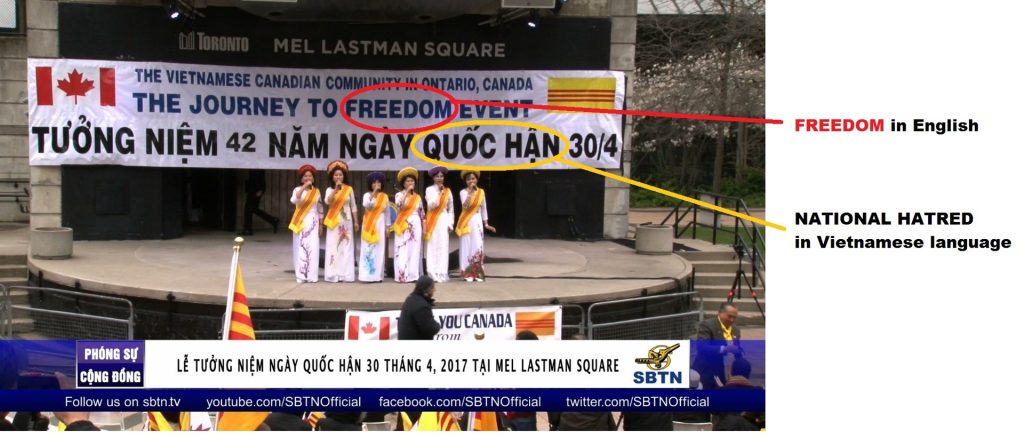

Many Canadians may be unaware of the hate message associated with Journey to Freedom Day events, and the yellow scarf and flag.
how to spot it: “quốc hận” = “national hatred”
“Journey to Freedom”: The hate rhetoric
As Harper planning for next election, $5 at a time, Bill S-219 was introduced in 2014 as the Black April Day Act, later changed to Journey to Freedom Day.
The so-called “Journey to Freedom” day has promoted to Canadians as honouring the “incredible contributions that Vietnamese refugees have now made to building our great country” but the Vietnamese slogans on the banners of those assembled literally promote hatred against community members who don’t agree with the hate message.
Journey to Freedom is rendered in Vietnamese as “Tưởng niệm Quốc Hận 30-4″, which means “Commemoration of national hatred on April 30”. This day is known in Vietnam as the Liberation of the South day, April 30, 1975.
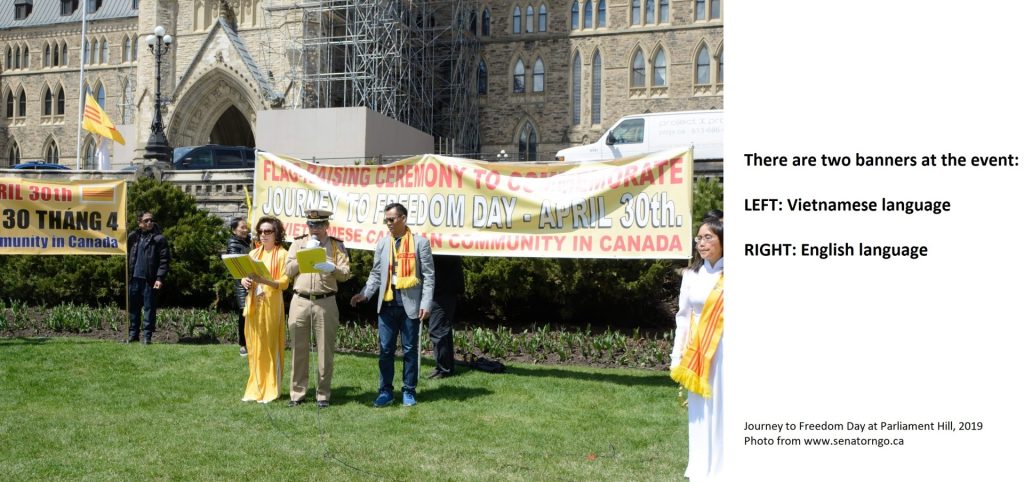
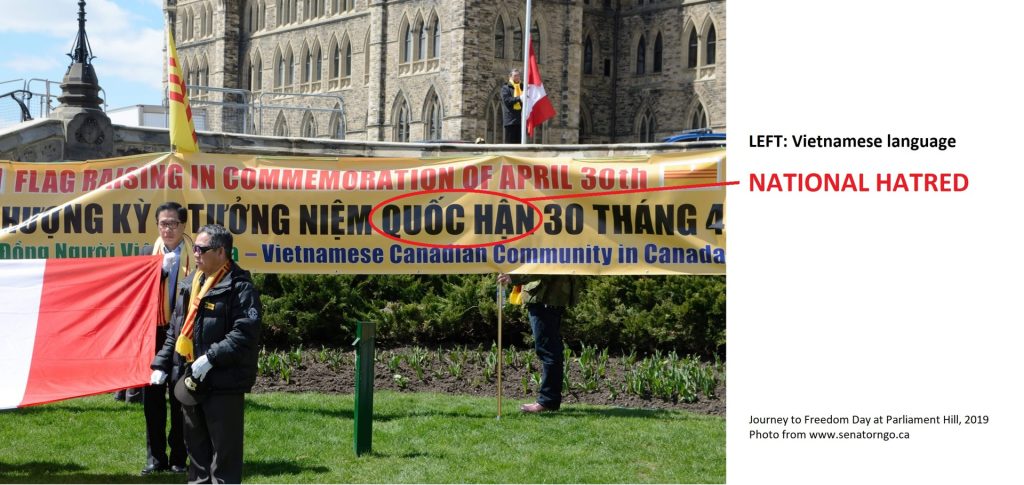
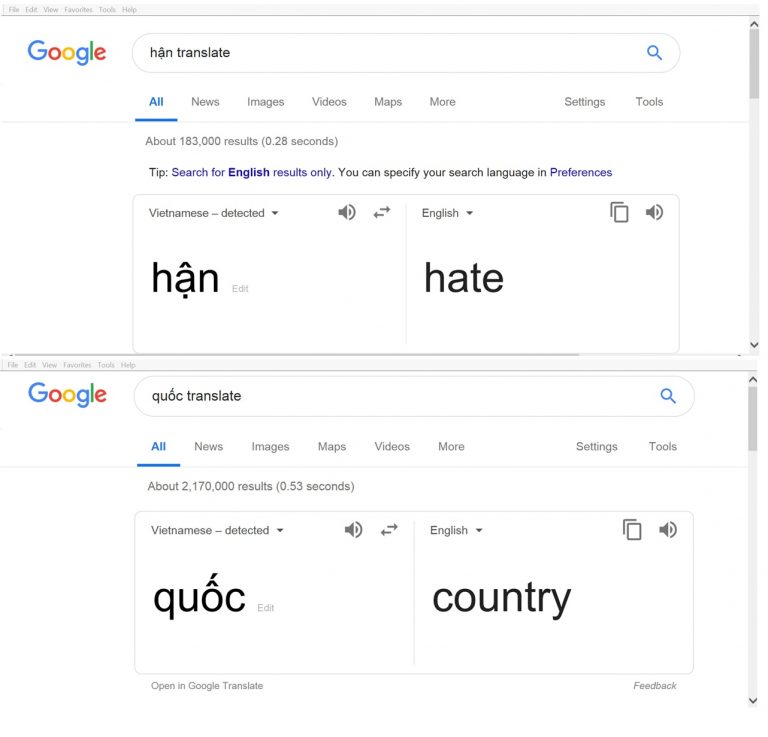
The Government of Canada, having recently passed Bill C-9, should take meaningful steps to help prevent the spread of hatred, division, and conflict within the Vietnamese Canadian community. It should also ensure that Parliament Hill is not used to provide a platform or institutional support for activities that promote hatred or hostility toward members of the community, but instead serves as a place that upholds mutual respect, inclusion, and social harmony. Read more: Canada’s stronger hate crime protections become law by the Department of Justice Canada.
“Journey to Freedom Day,” established through Bill S-219, was passed by Parliament in 2015 under Prime Minister Stephen Harper, with Jason Kenney serving as Minister of Employment and Social Development at the time and Minister of Citizenship, Immigration and Multiculturalism until 2013.

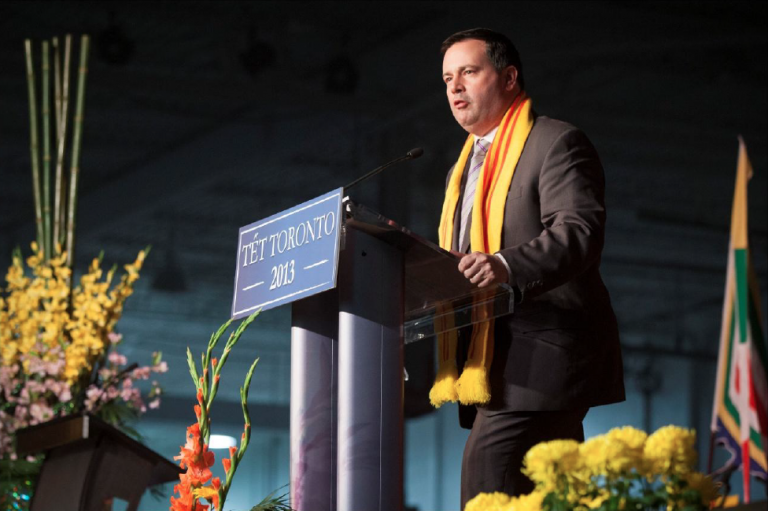
Members of the Canada-Vietnam Association across Canada joined forces to strongly oppose the Journey to Freedom bill.


Further Reading: Backward Bill Passed, but Vietnamese-Canadians Move Forward, New Canadian Media (2015)
The yellow symbol
“Ensigns bearing Confederate and neo-Nazi imagery defined the Jan. 6 riot at the U.S. Capitol. But for Vietnamese Americans, it’s the sight of a defunct flag — representing a country that ceased to exist nearly a half-century ago — that brought up painful questions about identity, trauma and the legacy of U.S. imperialism.”
Read more: Why the defunct South Vietnam flag was flown at the Capitol riot by Claire Wang, NBC News (2021).
Also: Why the flag of South Vietnam flew at US Capitol siege by Long Bui, The Conversation (2021).
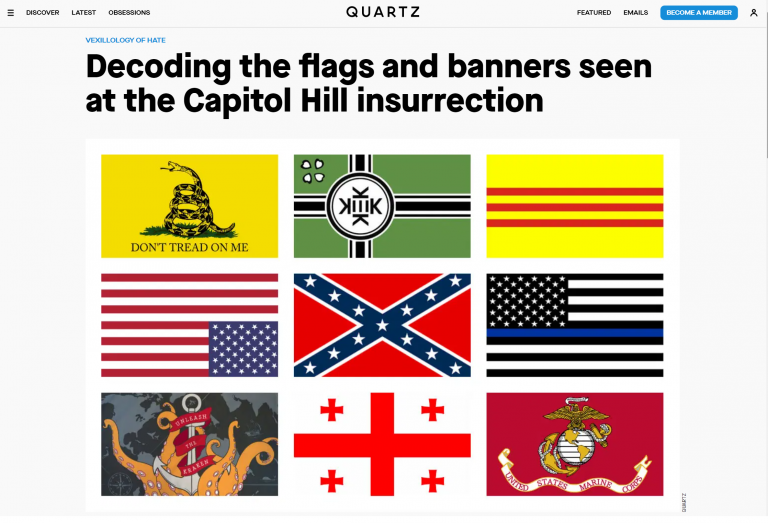

Impact on the community: Threats of violence
Anh Ngo (2016) argues that the lived experiences and challenges of the Vietnamese community in Toronto are not reflected in the social work literature that continues to represent them as exceptional refugees. She explained that the “threat of violence was experienced by participants but also internalized as fear.”
Read the full article: A Case Study of the Vietnamese in Toronto: Contesting Representations of the Vietnamese in Canadian Social Work Literature
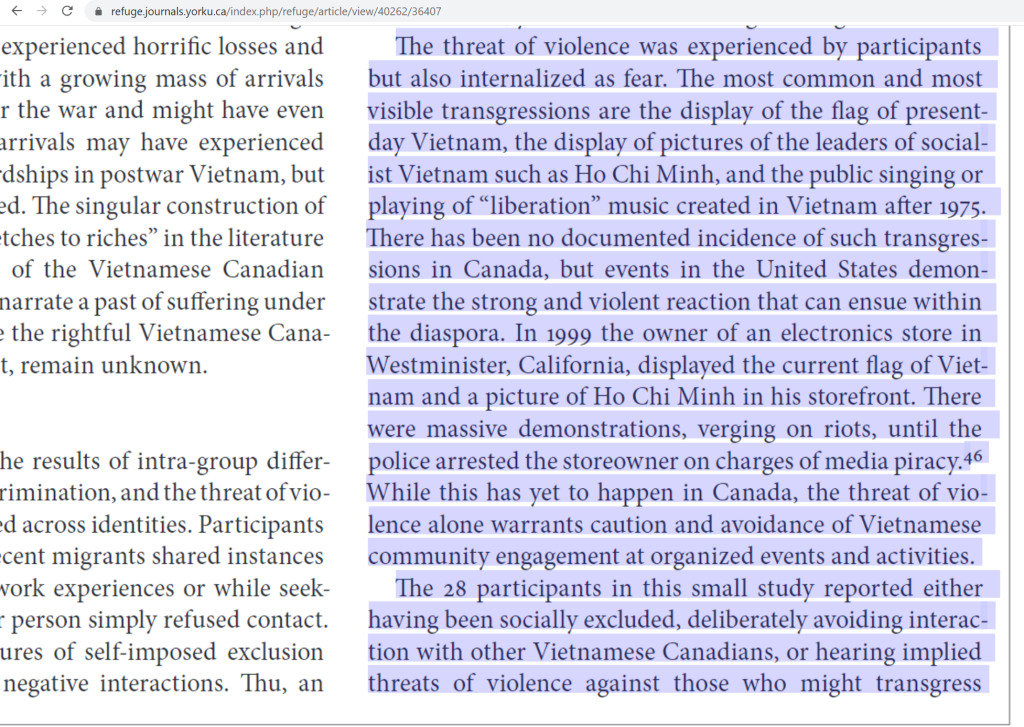
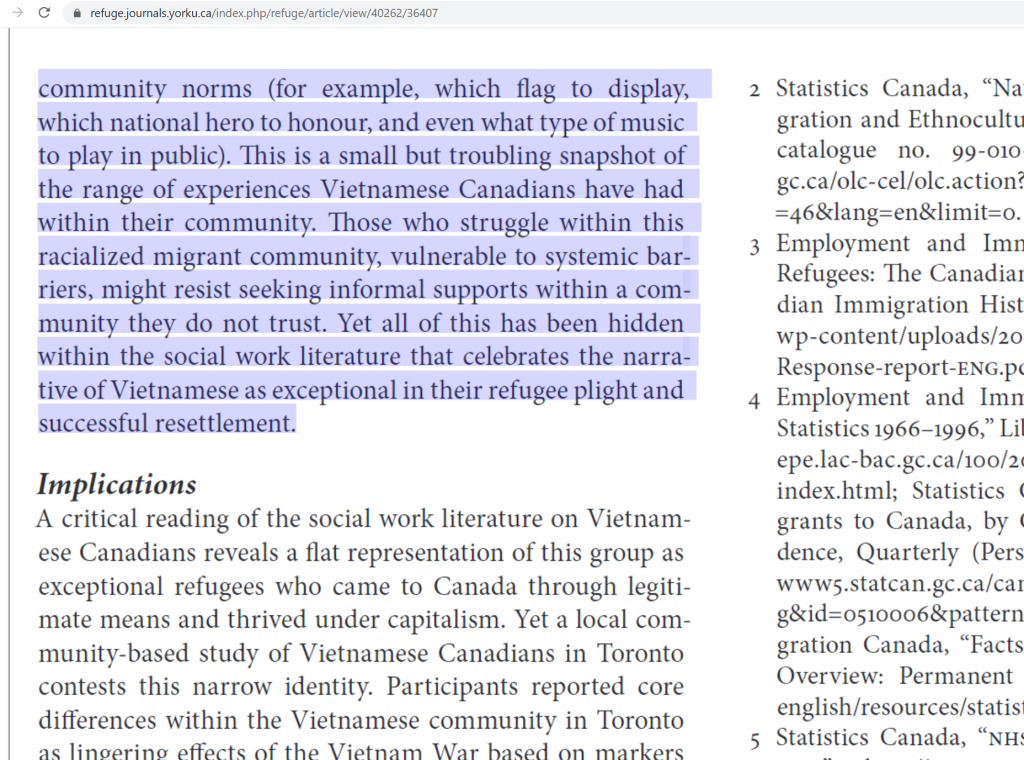
[Community members] reported hearing implied threats of violence against those who might transgress community norms [regarding flag, hero, music].